


News
Singing in the rain? How Amazonian bats respond to weather
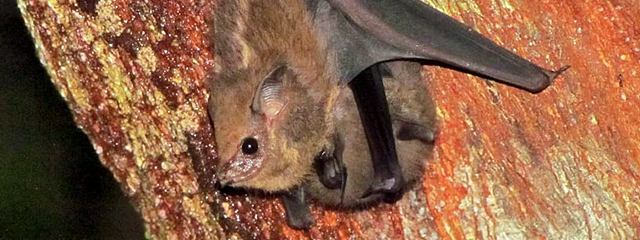 We already know that moonlight affects Amazonian bat activity. In temperate regions, temperature strongly conditions bat activity, as bats hibernate, to save energy in a time of low insect availability. In tropical rainforests, however, it is warm and insects are abundant year round, and rainfall is the most variable environmental factor. Frequent rainfall can affect bat activity. In her PhD thesis, Giulliana Appel asked how insectivorous bats respond to variation in temperature, rainfall and moonlight in the Amazon forest.
Study on Amazon forest domestication wins thesis of the year
 The doctoral thesis of Carolina Levis at INPA's graduate program in Ecology was chosen as best thesis of 2019 in the area of Biodiversity by Capes, the Brazilian National Council for Higher Education, for her research on the domestication process of the Amazon forest by pre-Columbian populations.
Abundance variation in space and time: a test with Amazonian soil mites
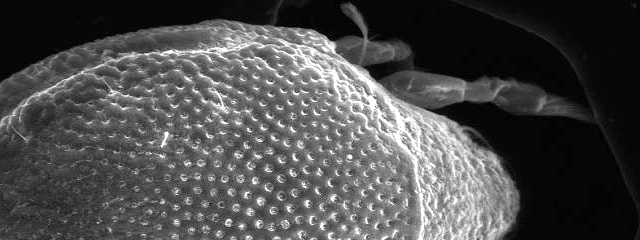 For his doctoral thesis in Ecology, Pedro Aurélio Costa Lima Pequeno used the soil mite, Rostrozetes ovulum in a rainforest environment to test the assumptions that observed spatial abundance patterns are constant over time, and that temporal abundance patterns are constant over space. His results were published in Pedobiologia and showed that the distribution of a species can be highly dynamic, even in sheltered, tropical forest soils. The results have implications for commonly used soil fauna sampling protocols.


