

Abundance variation in space and time: a test with Amazonian soil mites
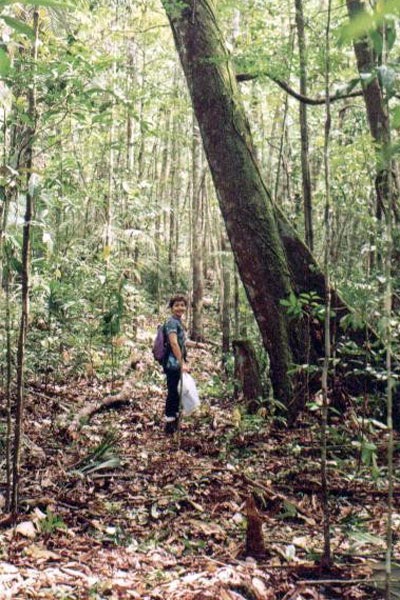
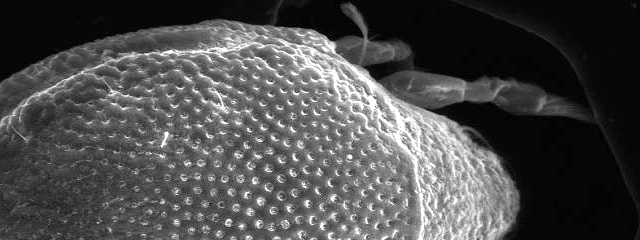 For his doctoral thesis in Ecology, Pedro Aurélio Costa Lima Pequeno used the soil mite, Rostrozetes ovulum in a rainforest environment to test the assumptions that observed spatial abundance patterns are constant over time, and that temporal abundance patterns are constant over space. His results were published in Pedobiologia and showed that the distribution of a species can be highly dynamic, even in sheltered, tropical forest soils. The results have implications for commonly used soil fauna sampling protocols.
The imminent sugarcane expansion into the Amazon
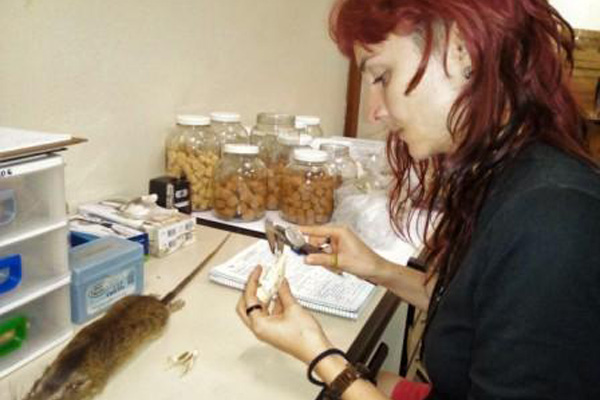
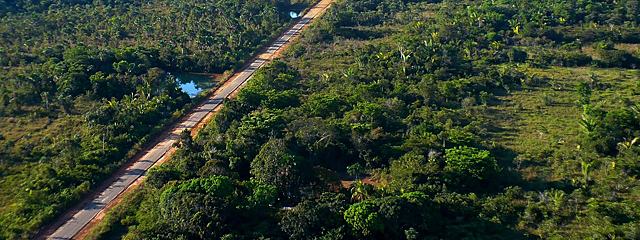 On the day the Brazilian senate almost opened the Amazon region to sugarcane plantation, a letter in Science by Lucas Ferrante and Philip Fearnside alerts to the dangers that this liberation represents for Amazonian ecosystem integrity. Lucas currently works on his doctoral thesis in Ecology at INPA.
Do Amazonian bats have lunar phobia?
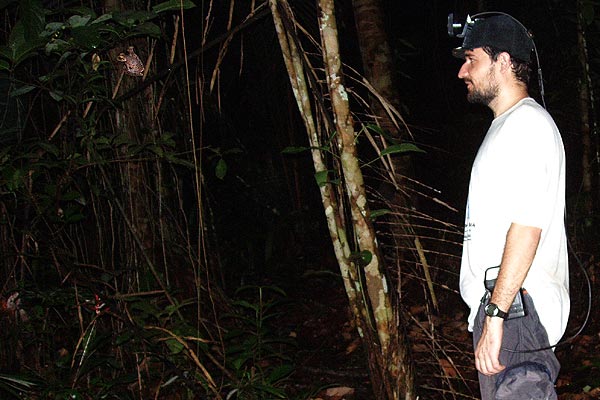
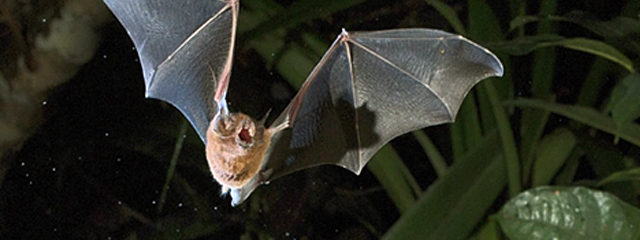 For her master’s project in Ecology, Giulliana Appel tested the hypothesis of whether forest-dwelling Amazonian insectivorous bats decrease activity in intense moonlight, as is generally accepted for bats in other regions. Her results were published in Mammalian Biology, and showed that five bat species in central Amazonia behaved differentially in relation to moonlight.